


Cookie Preferences
By clicking, you agree to store cookies on your device to enhance navigation, analyze usage, and support marketing
Thank you! Your submission has been received!
Oops! Something went wrong while submitting the form.
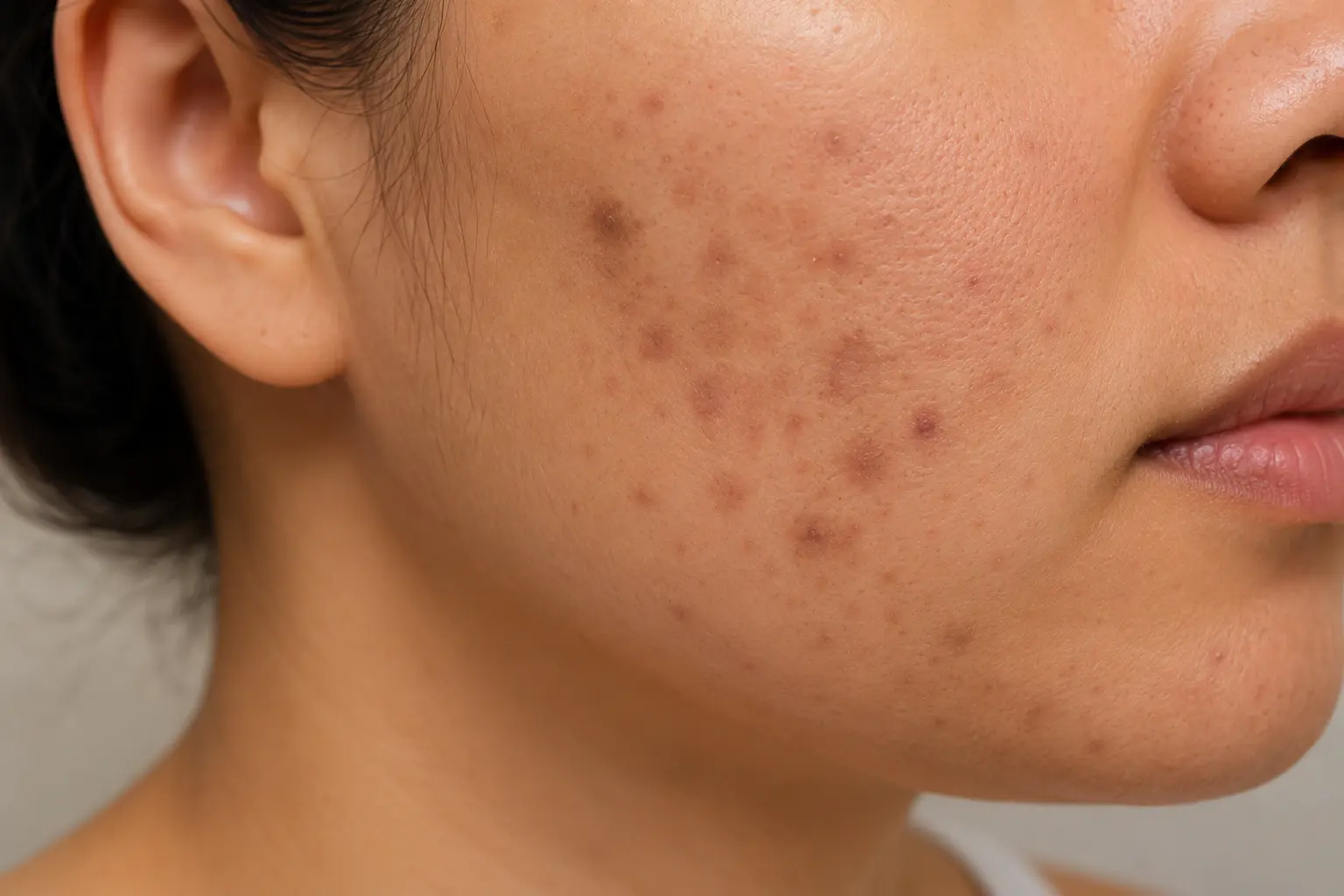
You might think insulin resistance is just about blood sugar or weight gain—but your skin often knows long before you do. In fact, some of the most common skin concerns I see every day are actually early signs of insulin resistance. Let's break it down in a way that actually makes sense.
Insulin is a hormone that helps move sugar (glucose) from your bloodstream into your cells for energy.
When your body becomes resistant to insulin:
If your acne:
…it may not be a skin problem—it may be a hormone problem.
High insulin levels increase androgen hormones (such as testosterone), which can:
This is one of the most recognizable signs of insulin resistance.
Look for darkened, thickened skin on the:
This condition is called Acanthosis Nigricans.
High insulin levels stimulate skin cells to grow and thicken, meaning your skin is literally responding to metabolic stress.
Those tiny, soft, hanging growths?
They're called acrochordons (skin tags), and they're strongly associated with insulin resistance.
Common areas include:
They're not dangerous—but they can be an important clue.
This often goes hand in hand with acne but can also occur on its own.
If your skin:
Insulin resistance may be affecting your body's ability to regulate inflammation and repair damaged skin.
Here's the part many people don't hear:
You can't out-skincare insulin resistance.
Improving your skin often means addressing what's happening inside your body, too.
A good place to start:
If you're noticing:
…it may be worth getting evaluated.
These symptoms aren't just cosmetic—they can be early signs of metabolic health concerns.
At Wellwell, we look at both sides of the equation.
We address:
Because treating one without the other is often why people continue to struggle with recurring skin concerns.


Get clear answers and the right treatment without the guesswork. Book your appointment today.

We treat how you look and feel at the same time.

