


Cookie Preferences
By clicking, you agree to store cookies on your device to enhance navigation, analyze usage, and support marketing
Thank you! Your submission has been received!
Oops! Something went wrong while submitting the form.
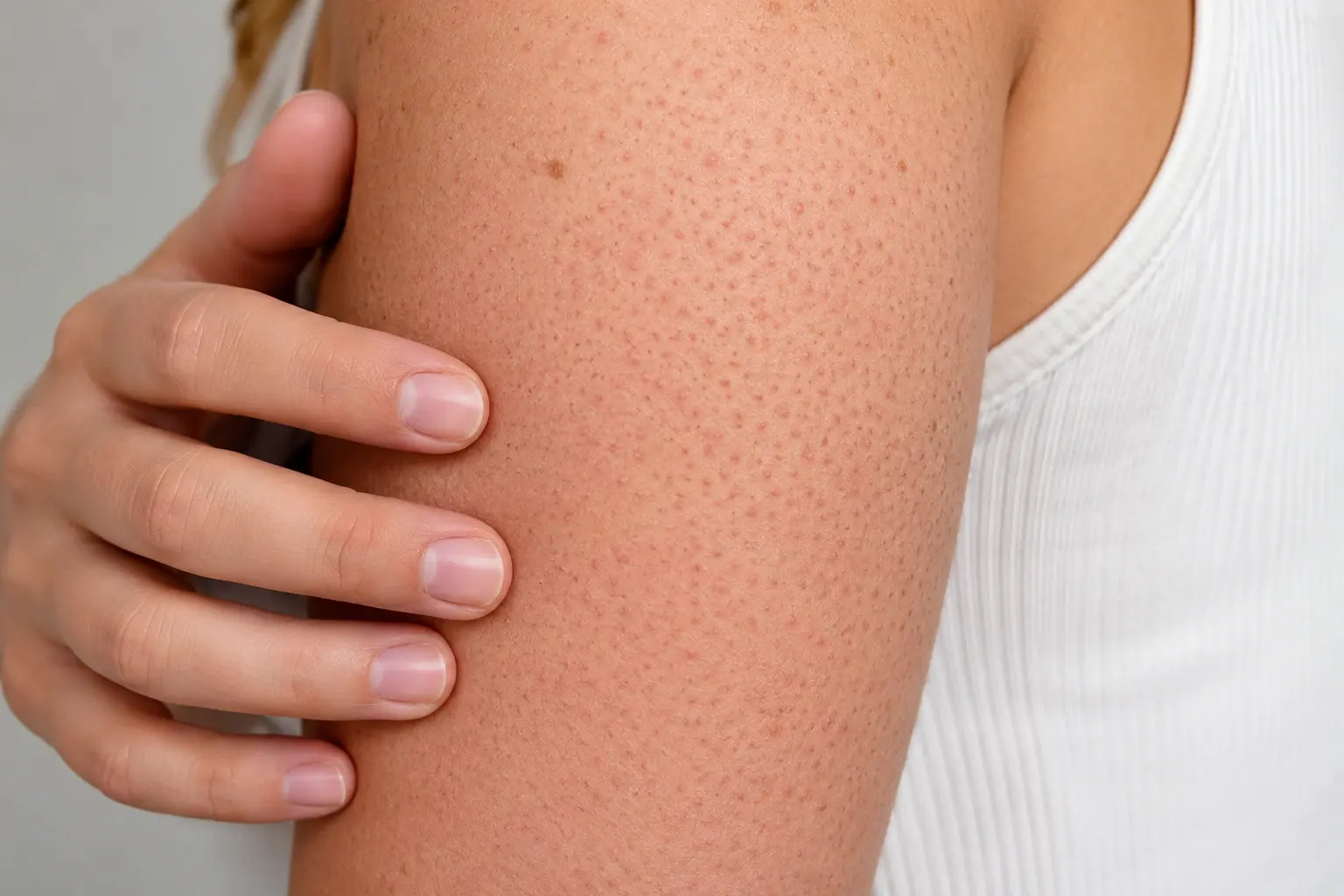
If you've noticed small, rough bumps on your upper arms, thighs, or cheeks that never seem to go away—no matter how much you moisturize—you may have Keratosis Pilaris (KP). It's one of the most common and harmless skin conditions, and thankfully, it's also treatable with the right skincare routine.
Keratosis Pilaris occurs when keratin, a natural protein that protects the skin, builds up and plugs the hair follicles. The result is tiny, rough bumps that often feel like sandpaper or "chicken skin."
KP most commonly appears on:
It's not contagious, and it doesn't cause scarring, but it can be frustrating if you've been trying to smooth your skin for years.
Keratosis Pilaris often develops during childhood or adolescence and frequently improves with age.
You're more likely to develop KP if you have:
Many people also notice that KP worsens during cold, dry weather or after using harsh soaps that strip the skin's natural moisture.
While there isn't a permanent cure, consistent skincare can dramatically improve both the appearance and texture of your skin.
Look for products containing ingredients such as:
These ingredients help dissolve keratin plugs while softening rough skin.
One excellent over-the-counter option is CeraVe SA Lotion for Rough & Bumpy Skin, which combines salicylic acid with ceramides to exfoliate while supporting the skin barrier.
Apply once or twice daily for best results.
Immediately after bathing, apply a rich, fragrance-free moisturizer to lock in hydration.
Look for ingredients like:
Daily moisturizing helps improve skin softness and reduce roughness.
It may be tempting to scrub away the bumps, but physical exfoliants often make KP more irritated and red.
Instead, stick with:
If over-the-counter products aren't enough, a dermatology provider may recommend prescription treatments such as:
For many people, Keratosis Pilaris gradually improves with age.
With regular exfoliation and daily moisturizing, many patients notice smoother skin within just a few weeks.
Consistency is the key.
"Think of Keratosis Pilaris as a buildup issue, not an infection. The key is steady, gentle exfoliation and moisture. You can't scrub it away—but you can smooth it away."
At Skinetics TeleDerm, we evaluate your skin virtually and create a personalized treatment plan based on your skin type and lifestyle.
Smooth skin starts here—no waiting rooms, no stress.
Virtual. Visible. VIP.


Get clear answers and the right treatment without the guesswork. Book your appointment today.

We treat how you look and feel at the same time.

