


Cookie Preferences
By clicking, you agree to store cookies on your device to enhance navigation, analyze usage, and support marketing
Thank you! Your submission has been received!
Oops! Something went wrong while submitting the form.
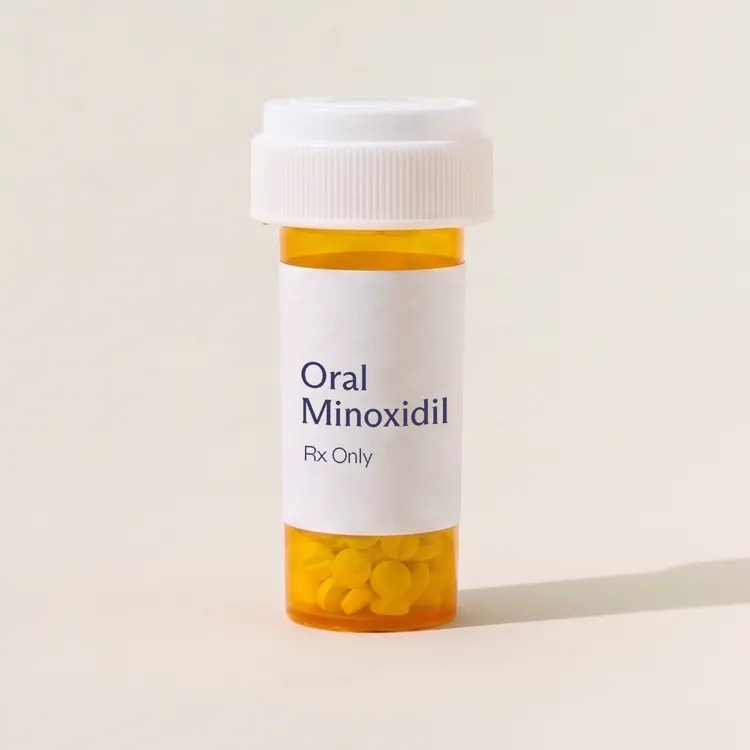
If you've noticed more hair in your drain than on your head lately, you're not alone. Hair loss is incredibly common and can happen for many reasons, including stress, hormonal changes, genetics, certain medications, and even major life events.
The good news? You have options.
One treatment that's gained a lot of attention in recent years is low-dose oral minoxidil—a tiny daily pill that's helping many people regrow thicker, healthier hair.
Minoxidil wasn't originally created for hair loss. It was first developed as a medication to treat high blood pressure.
During clinical use, doctors noticed an interesting side effect: patients were growing more hair.
That discovery eventually led to topical minoxidil (Rogaine®), and more recently, dermatologists have begun prescribing low-dose oral minoxidil as an effective off-label treatment for certain types of hair loss.
Oral minoxidil increases blood flow to your hair follicles and helps keep hairs in their active growth phase longer.
In simple terms, it encourages your follicles to produce thicker, stronger hairs while reducing premature shedding.
Results don't happen overnight, but with consistent use, many patients notice fuller, healthier hair over time.
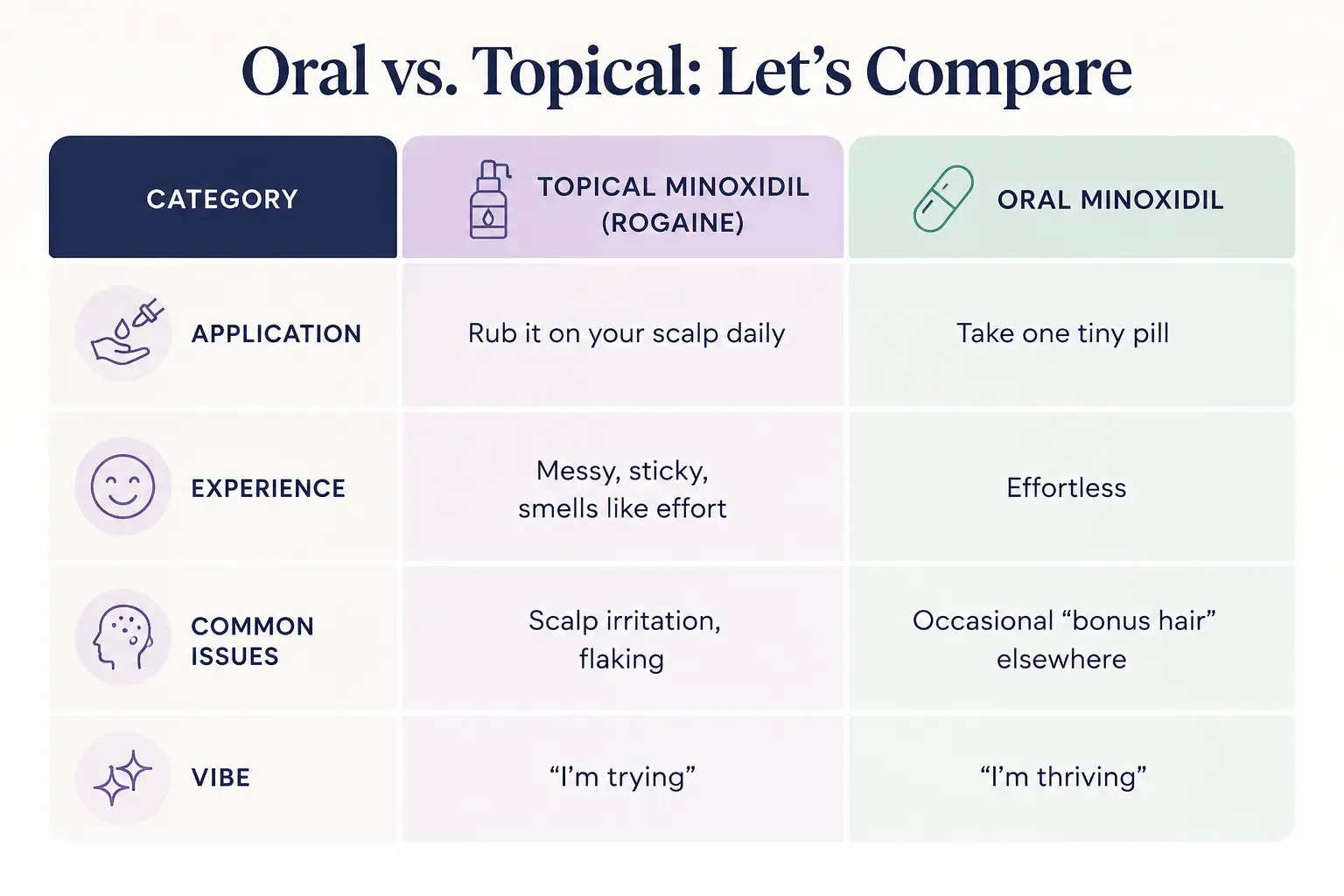
One of the most common questions we hear is:
"Will I grow hair everywhere?"
At low doses, some patients experience increased hair growth on the face or body. While this side effect isn't common for everyone, it's something we discuss before starting treatment.
The good news is that unwanted hair can often be managed with adjustments to your treatment plan. We're also developing a customized topical cream designed to help slow unwanted hair growth while allowing you to continue enjoying the benefits for your scalp.
Most patients begin noticing improvement within three to six months, with continued benefits over the first year of treatment.
When prescribed appropriately and monitored by an experienced medical provider, low-dose oral minoxidil is generally well tolerated.
Possible side effects may include:
Not everyone is a candidate for oral minoxidil, which is why a medical evaluation is important before starting treatment.
Hair loss isn't one-size-fits-all, and neither is treatment.
At wellwell, we look beyond your symptoms to understand what's contributing to your hair loss, including hormones, medications, nutrition, stress, and genetics.
When appropriate, our providers prescribe low-dose oral minoxidil as part of a personalized treatment plan. We may also combine it with targeted topical therapies and other evidence-based treatments to help you achieve the best possible results.
Because the goal isn't just growing more hair—it's creating a plan that's safe, sustainable, and tailored to you.


Get clear answers and the right treatment without the guesswork. Book your appointment today.

We treat how you look and feel at the same time.

