


Cookie Preferences
By clicking, you agree to store cookies on your device to enhance navigation, analyze usage, and support marketing
Thank you! Your submission has been received!
Oops! Something went wrong while submitting the form.
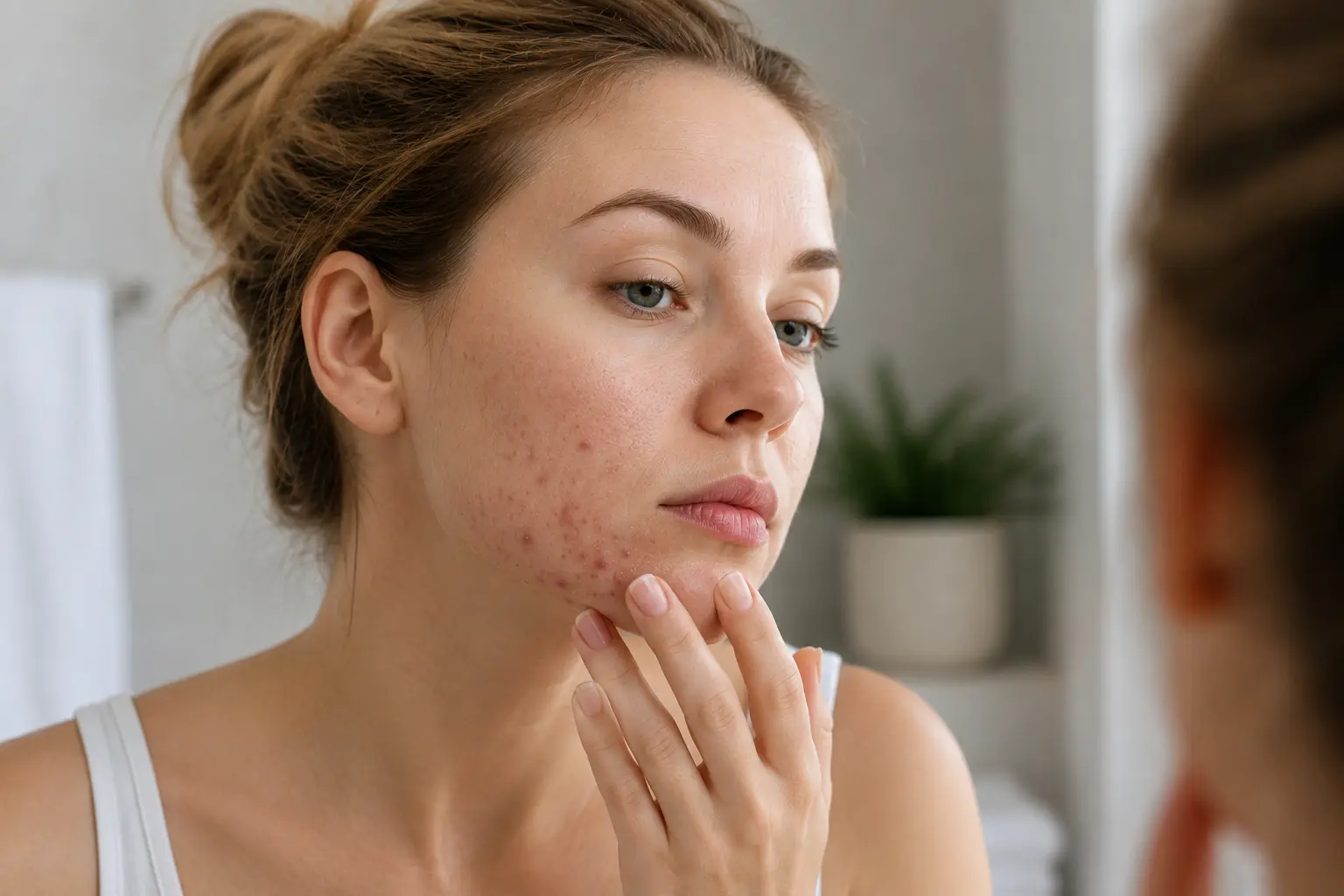
Have you ever wondered why you're dealing with stubborn acne and chin hair at the same time? You're not alone.
These symptoms often point to something deeper: Polycystic Ovary Syndrome (PCOS). For many women, the skin is one of the first places PCOS becomes noticeable.
PCOS is a hormonal condition that affects how your ovaries function. It often involves:
When these hormones become imbalanced, your skin often reflects those changes.
PCOS acne typically:
Higher androgen levels stimulate your oil glands to produce more sebum. Excess oil combines with dead skin cells and bacteria, leading to clogged pores and inflammation.
This is why skincare products alone often aren't enough to control PCOS acne.
Many women with PCOS develop excess hair growth in areas such as:
This condition is called hirsutism.
The same hormones responsible for acne also stimulate hair follicles, resulting in thicker, darker facial and body hair.
PCOS can also cause:
These changes are also linked to increased androgen levels and excess oil production.
Many women with PCOS notice dark, velvety patches of skin on the:
This condition is called Acanthosis Nigricans.
It is commonly associated with insulin resistance and can be an early sign that your body is having difficulty regulating blood sugar.
While excess hair grows in some areas, hair loss may occur on the scalp.
PCOS may cause:
This type of hair loss is called androgenic alopecia and is also driven by hormonal changes.
Most skin symptoms associated with PCOS are caused by two underlying factors.
Higher androgen levels can lead to:
Insulin resistance can:
Because these two issues influence each other, treating only the skin often provides limited results.
The most effective approach addresses both the skin and the underlying hormonal imbalance.
Treatment options may include:
These treatments help manage acne but do not correct the hormonal cause.
Lifestyle changes can improve insulin sensitivity and reduce symptoms.
Start by:
Some patients may also benefit from hormonal medications or insulin-sensitizing treatments recommended by their healthcare provider.
Talk to a healthcare provider if you experience:
These symptoms may indicate an underlying hormonal condition that requires evaluation.
At Wellwell, we understand that skin health and hormone health are closely connected.
Our approach focuses on both:
By treating both, we aim for longer-lasting improvements rather than temporary results.
PCOS affects much more than your menstrual cycle. It can also have a significant impact on your skin, hair, and overall confidence. Understanding the underlying cause is the first step toward finding treatment that works.


Get clear answers and the right treatment without the guesswork. Book your appointment today.

We treat how you look and feel at the same time.

