


Cookie Preferences
By clicking, you agree to store cookies on your device to enhance navigation, analyze usage, and support marketing
Thank you! Your submission has been received!
Oops! Something went wrong while submitting the form.
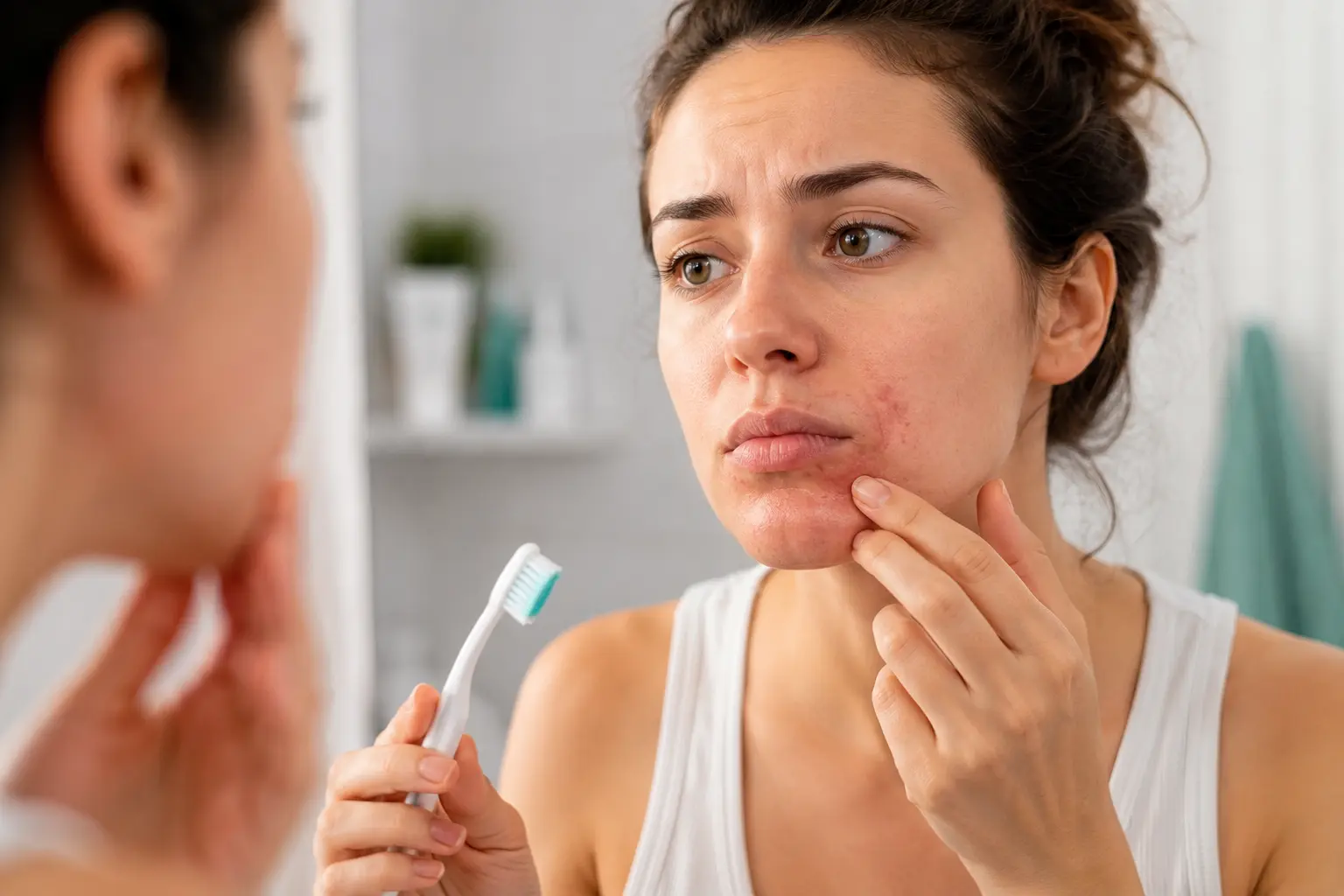
If you've tried acne treatments, moisturizers, and steroid creams without success, your toothpaste—not your skincare—could be triggering perioral dermatitis.
If you have a persistent rash around your mouth that won't go away, you may have perioral dermatitis rather than acne.
Perioral dermatitis is a common inflammatory skin condition that causes clusters of small red bumps around the mouth, nose, or eyes. It can feel dry, itchy, burning, or sensitive, and many people mistake it for acne or eczema.
Because the symptoms look similar, people often use acne products or steroid creams that actually make the rash worse.
You've probably tried:
If nothing seems to work, it's worth looking beyond your skincare routine.
One of the most overlooked causes of perioral dermatitis is your toothpaste.
Yes—it can.
If your toothpaste comes into contact with your skin two or three times a day, every day, it has the potential to irritate the delicate skin around your mouth.
For people with sensitive skin or perioral dermatitis, certain toothpaste ingredients may weaken the skin barrier and trigger inflammation.
SLS is the ingredient responsible for creating foam while brushing.
Although effective at cleaning teeth, it can:
Fluoride is important for preventing cavities, but in some people with perioral dermatitis, fluoride toothpaste may worsen symptoms.
This doesn't mean everyone should avoid fluoride. It simply means it may be one trigger among many.
Strong flavorings such as:
can irritate already inflamed skin, especially when combined with SLS.
If you suspect your toothpaste is contributing to your rash, consider switching to a gentler formula.
Look for toothpaste that is:
Some products that many patients tolerate well include:
Changing toothpaste alone won't cure perioral dermatitis, but it can remove an ongoing source of irritation.
To help your skin heal, temporarily avoid products that commonly worsen perioral dermatitis, including:
Keeping your skincare routine simple often leads to better results.
Treatment depends on what's causing your flare-up, but most plans include:
Most people begin seeing improvement within several weeks once the underlying trigger is addressed.
If your rash has lasted more than a few weeks, continues to spread, or keeps returning despite changing your skincare routine, it's time for an evaluation.
Perioral dermatitis usually responds very well to the right treatment, but getting the correct diagnosis is important. Treating it like acne or eczema can actually prolong your symptoms.
If you've been wondering, "Why do I have a rash around my mouth?" your toothpaste may be part of the answer. Perioral dermatitis is one of the most commonly misdiagnosed facial rashes, and everyday ingredients like SLS, fluoride, and flavoring agents can contribute to flare-ups in some people. The good news? Once the trigger is identified, perioral dermatitis is highly treatable.
At wellwell, we make getting answers simple.
You don't have to keep guessing what's causing your rash. We'll help identify the trigger and create a treatment plan that gets your skin back on track.


Get clear answers and the right treatment without the guesswork. Book your appointment today.

We treat how you look and feel at the same time.

