


Cookie Preferences
By clicking, you agree to store cookies on your device to enhance navigation, analyze usage, and support marketing
Thank you! Your submission has been received!
Oops! Something went wrong while submitting the form.
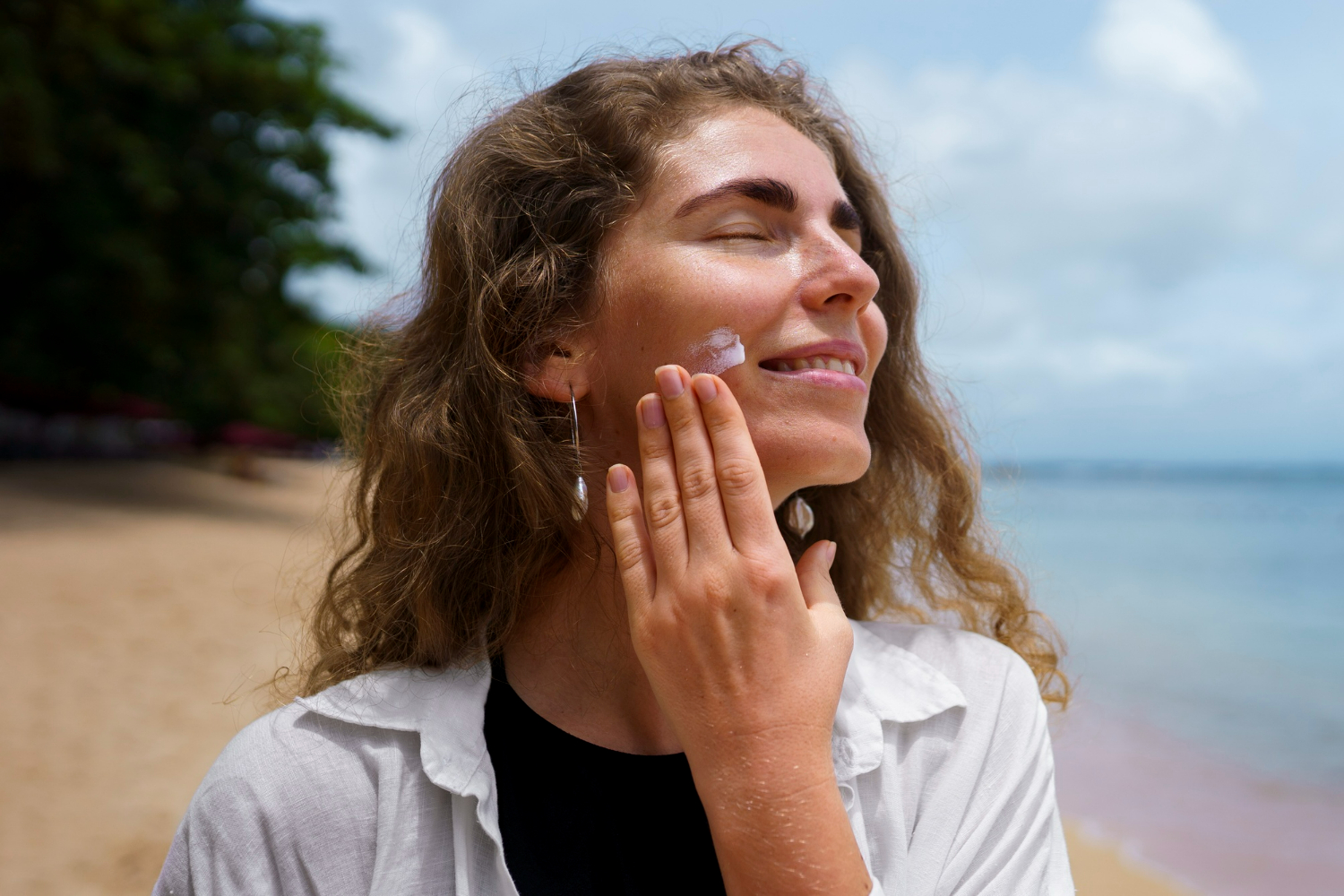
SPF (Sun Protection Factor) measures how well a sunscreen protects against UVB rays—the rays responsible for sunburn and direct DNA damage.
SPF measures UVB protection, not the amount of time you can safely stay in the sun.
SPF tells you how much longer it would take UVB rays to redden your skin compared to wearing no sunscreen.
Example:
If your skin burns in 10 minutes without sunscreen:
SPF 30 means it would take approximately 30 times longer (300 minutes) to burn—provided the sunscreen is applied correctly and in the recommended amount.
However, there's an important catch.
Most people apply only ¼ to ½ of the recommended amount, meaning they never receive the full SPF protection listed on the bottle.
Remember: The best sunscreen is the one you'll actually wear consistently.
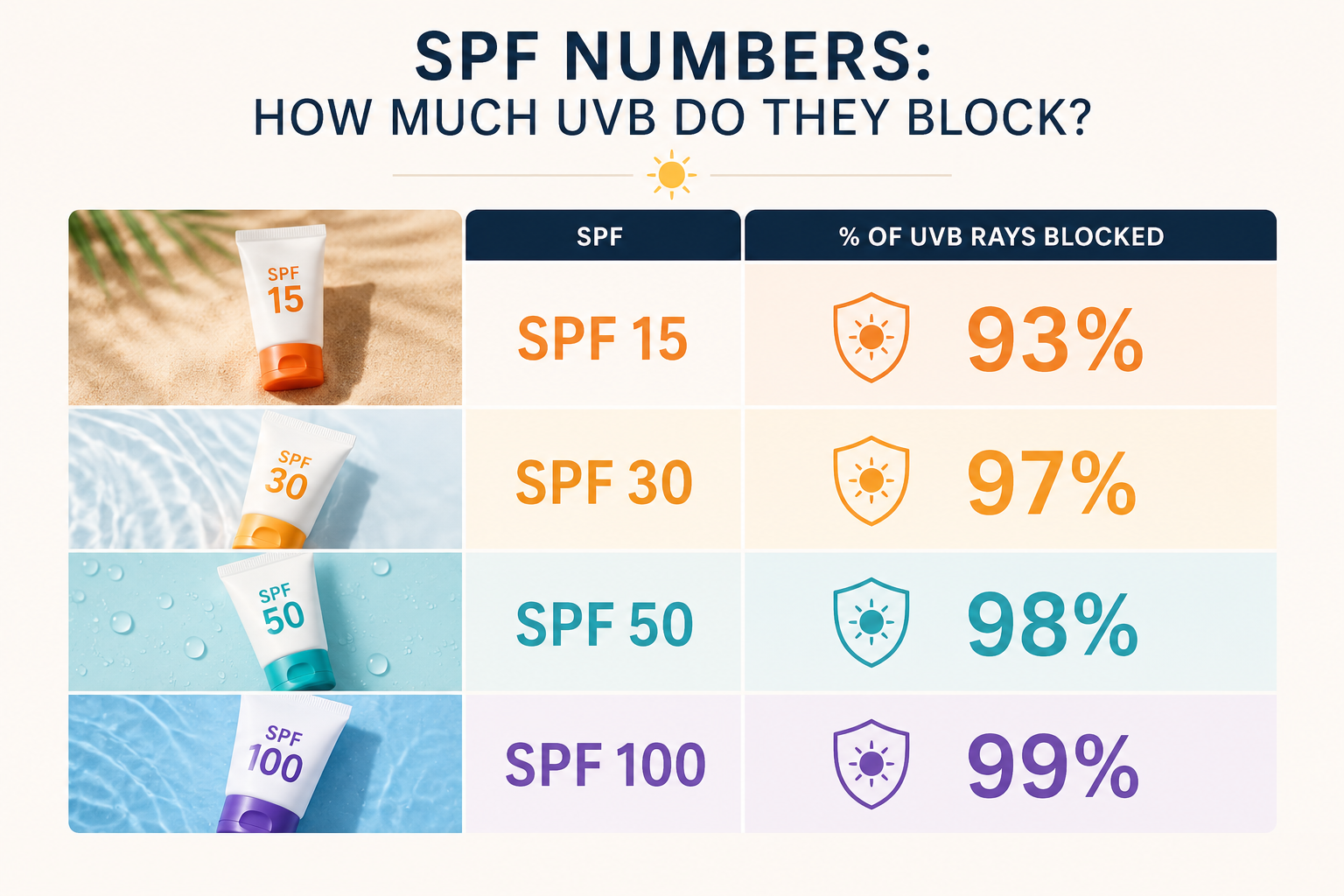
SPF 50 does not provide double the protection of SPF 25. Protection increases only slightly as the SPF number gets higher.
For most people:
A broad-spectrum sunscreen protects against both major types of ultraviolet radiation.
UVB
UVA
If a sunscreen does not say Broad Spectrum, it may only protect against UVB rays.
Unlike UVB rays, UVA rays:
UVA exposure occurs:
That's why dermatologists recommend wearing sunscreen every day—even if you don't plan to spend much time outside.
Someone wearing SPF 50 that is not broad spectrum may experience:
This is why some patients say:
"I wear SPF 50 every day, but my melasma keeps getting worse."
In many cases, they're protected from UVB but not adequately protected from UVA.
Common ingredients
Benefits
Chemical filters absorb UV radiation and convert it into a small amount of heat within the skin's surface.
Benefits
Despite common social media claims, current evidence does not show that approved chemical sunscreens cause cancer.
Studies demonstrating systemic absorption do not demonstrate toxicity.
Systemic absorption does not equal harm.
"SPF tells you how well a sunscreen protects against sunburn. Broad spectrum means it also protects against the rays that cause aging, brown spots, collagen breakdown, and deeper skin damage. You want both."
Mineral sunscreens protect by:
Although they're often described as "physical blockers," modern research shows they actually use all three mechanisms.
Chemical sunscreen filters absorb UV radiation and convert it into a small amount of heat before it can damage the skin.
Sun-protective clothing is rated using UPF (Ultraviolet Protection Factor) rather than SPF.
UPF measures how much ultraviolet radiation fabric blocks before it reaches your skin, making it an excellent complement to sunscreen during prolonged outdoor activities.
"SPF you apply fades. SPF you wear stays."
The best sunscreen is the one you enjoy wearing every day and reapply as directed.
Yes—especially if you spend time near windows.
Glass blocks most UVB rays, but UVA rays can still pass through windows. Since UVA contributes to pigmentation, collagen breakdown, and premature aging, daily sunscreen is still recommended if you work or sit near natural light.
For daily wear, I generally prefer a tinted mineral sunscreen, which can double as light makeup, and a clear mineral sunscreen for outdoor activities.
Some favorites include:
There are many excellent broad-spectrum sunscreens available. The most important thing is finding one you'll use consistently every day.


Get clear answers and the right treatment without the guesswork. Book your appointment today.

We treat how you look and feel at the same time.

