


Cookie Preferences
By clicking, you agree to store cookies on your device to enhance navigation, analyze usage, and support marketing
Thank you! Your submission has been received!
Oops! Something went wrong while submitting the form.
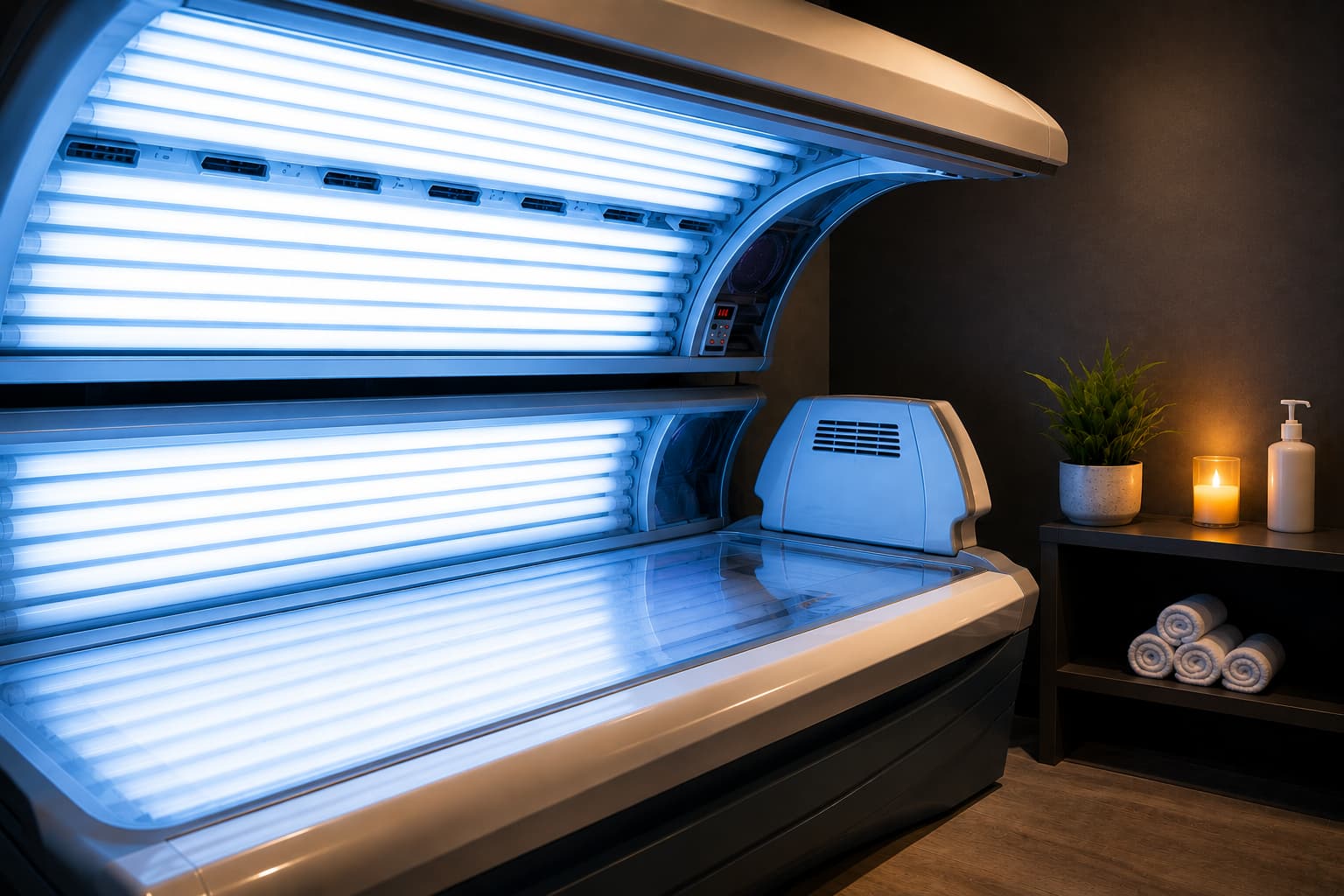
Thinking about using a tanning bed? Read this first.
A bronzed glow might seem worth it before vacation, prom, or a special event. But tanning beds expose your skin to concentrated ultraviolet (UV) radiation that can significantly increase your risk of skin cancer, premature aging, and permanent skin damage.
Many people still believe indoor tanning is safer than tanning outdoors. The truth is that there is no such thing as a safe tanning bed.
At wellwell, we help patients protect their skin for life—not just treat problems after they appear. Here's what everyone should know before stepping into a tanning bed.
No.
Tanning beds use ultraviolet (UV) radiation to darken the skin. That darker color isn't a sign of healthy skin—it's your body's response to DNA damage.
The UV rays used in many tanning beds can be even more intense than natural sunlight. Every tanning session increases cumulative UV exposure, which raises your lifetime risk of skin cancer.
According to the American Academy of Dermatology, there is no safe way to use a tanning bed.
When UV radiation reaches your skin, it damages the DNA inside your skin cells.
Your body responds by producing more melanin—the pigment that creates a tan—but the damage has already occurred.
Over time, repeated UV exposure can lead to:
A tan is actually your skin's attempt to protect itself after being injured.
Research continues to show strong links between indoor tanning and skin cancer.
Skin cancer isn't the only concern.
UV exposure breaks down collagen and elastin, leading to:
Many of the signs people associate with aging actually result from years of UV damage.
Without proper eye protection, tanning beds may increase the risk of:
Even if you never develop skin cancer, repeated indoor tanning accelerates skin aging and weakens the skin's ability to repair itself.
This is one of the biggest myths in skincare. Many people believe getting a "base tan" before vacation helps prevent sunburn.
It doesn't.
A tan provides only about SPF 2 to 4 protection—far below the SPF 30 or higher dermatologists recommend.
Using a tanning bed before spending time outdoors simply adds another layer of UV damage.
Don't panic. Past tanning doesn't guarantee you'll develop skin cancer, but it does make regular skin checks even more important.
You should watch for:
Routine skin exams can help detect skin cancer early, when treatment is most effective.
If you love the appearance of tanned skin, you don't need UV exposure to achieve it.
Safer options include:
These products create the appearance of a tan without damaging your skin.
Healthy skin starts with prevention.
Dermatologists recommend:
Tanning beds aren't a safer alternative to the sun. Every session exposes your skin to concentrated UV radiation that increases your risk of melanoma, other skin cancers, premature aging, and lasting skin damage.
If you're looking for a healthy glow, choose sunless tanning products instead—and protect your skin for the future. At wellwell, we're here to help you prevent skin cancer, identify concerning skin changes early, and keep your skin healthy for years to come.
No. Research consistently shows that indoor tanning increases the risk of skin cancer. The American Academy of Dermatology states there is no safe tanning bed.
Yes. Every tanning session adds UV exposure, and cumulative exposure increases your lifetime risk of skin cancer.
Self-tanners and spray tans provide color without exposing your skin to harmful UV radiation.


Get clear answers and the right treatment without the guesswork. Book your appointment today.

We treat how you look and feel at the same time.

